How much do garden railings actually cost in London? It is one of the most searched questions we get asked, and one of the hardest to answer with a single number, because the price depends on material, height, design complexity, the condition of the existing boundary, and which part of London you are in.
This guide gives you a clear, honest 2026 price breakdown for garden railings in London, covering every major cost factor so you can compare quotes properly and understand exactly what you are paying for.
Garden Railings Cost London: The Quick Answer
For a complete garden railing installation in London, including the railing itself, posts, and professional fitting, most homeowners pay between £150 and £380 per linear metre.
| Railing Type | Typical Cost Per Linear Metre (London 2026) |
| Standard steel, vertical bar, powder-coated | £150 to £220 |
| Steel with decorative details, period profile | £200 to £320 |
| Fully bespoke fabricated steel railings | £280 to £380+ |
| Aluminium railings (contemporary) | £180 to £280 |
| Wrought iron or wrought iron-style restoration | £300 to £450+ |
A standard 6 to 8 metre front boundary run in London costs between £900 and £3,000 all in, depending on the specification chosen. The sections below explain exactly what drives where in that range your project will land.
Why London Prices Are Higher Than National Averages
National cost guides for garden railings and fencing consistently note that London and the South East run 20 to 30 percent above the UK average, and that gap is real rather than a generic disclaimer.
Skilled metalwork fabrication and installation labour in London costs more than in most other parts of the UK. A two-person installation team working on a standard front boundary railing run typically costs £350 to £600 per day in day rates across South West London, against £200 to £300 in many other UK regions. For a job that takes one to two days on site, that difference alone adds up.
Ground conditions in London also play a role. Much of South West London sits on London clay, which expands and contracts with seasonal moisture and requires deeper, more carefully specified post foundations than sandy or loam soil elsewhere. Properties with mature trees, established planting, or existing hardstanding to work around all add time to a job that looks straightforward on paper.
Access is the third factor. Many London properties have restricted parking, narrow side access, or terraced housing where materials need to be carried rather than driven to the work area. These practical realities of working in a dense city environment are reflected in the final price.
What Determines the Cost of Your Garden Railings
Material
This is the single biggest driver of cost. Steel railings that are hot-dip galvanised and powder-coated are the most common specification for London properties and sit in the middle of the cost range. Galvanising dipping the fabricated steel in molten zinc provides a corrosion barrier that lasts decades, and the powder coat finish on top provides the colour and additional protection.
Wrought iron, or wrought iron-style fabrication that replicates the hand-forged character of genuine period ironwork, costs considerably more. According to industry cost guides, genuine wrought iron-style railings average around £90 to £180 per metre for relatively simple designs, rising significantly for bespoke or highly decorative work. For period London properties in conservation areas where matching original ironwork matters, this additional cost is often unavoidable and is the right specification.
Aluminium sits at a similar price point to standard steel but offers lower long-term maintenance because it does not rust. It suits contemporary properties better than period ones, where the lighter visual weight of aluminium can look insubstantial against Victorian or Georgian brickwork.
Height
Standard front garden railings in London run between 900mm and 1,200mm. Taller railings use more material and require larger, more substantial posts to remain structurally sound, which increases both material and labour cost. For step railings or any application where the railing serves as a safety barrier at a change in level, building regulations set a minimum height of 1,100mm, and this is a legal requirement rather than a design choice.
Design Complexity
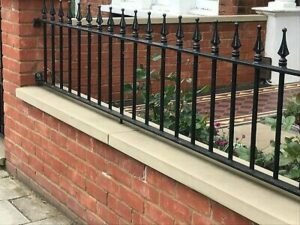
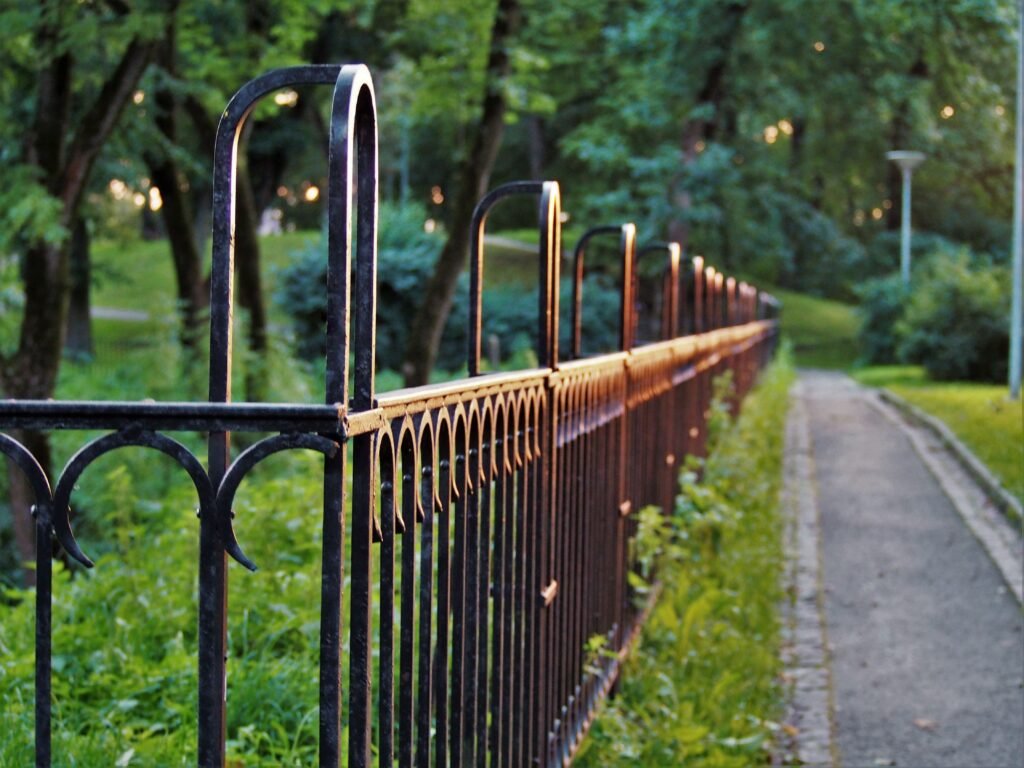
A simple vertical bar railing with a flat top rail is the most cost-effective design. Adding decorative elements scroll work, finials, curved sections, or a profile that matches specific period detailing increases fabrication time significantly because these elements are typically made by hand rather than produced on standard machinery.
For properties where the railing needs to match or reference existing ironwork on the property or the street, the design and pattern-matching process itself adds to the cost before any fabrication begins. This is time well spent on a period property but is a cost factor worth understanding upfront.
Existing Boundary Condition
If the existing boundary wall or plinth that the railings sit on is in good condition, the new railings can often be fixed directly into it, which keeps costs at the lower end of the range. If the existing wall or plinth needs repair, rebuilding, or new foundations before the railings can be installed, this adds a separate cost that is easy to underestimate when getting an initial quote. Always ask whether a quote includes an assessment of the existing boundary or only the railing itself.
Gate Sections
Many garden railing projects include a pedestrian gate as part of the run. A gate section costs more per linear metre than plain railing because it requires hinges, a latch mechanism, and a frame that can withstand repeated opening and closing without sagging. Budget an additional £200 to £500 for a standard pedestrian gate section within a railing run, more for a wider or more decorative gate.
Cost by Project Type
Standard Front Garden Boundary (6 to 8 metres)
The most common project we quote. A straightforward steel vertical bar railing, powder-coated black, on a sound existing boundary wall, with no gate section, typically costs £900 to £1,800 for a 6 to 8 metre run in London.
Front Garden Boundary with Gate Section
Adding a single pedestrian gate to the same run brings the typical cost to £1,200 to £2,400, depending on gate width and design.
Period-Sympathetic Restoration
For Victorian or Edwardian properties where the railing design needs to match or reference original ironwork, with decorative finials and a more involved fabrication process, a 6 to 8 metre run typically costs £1,800 to £3,000.
Side and Rear Boundary Railings
Garden railings for side or rear boundaries are usually less decorative than front elevations and can be specified more simply. Costs for these runs tend to sit at the lower to middle end of the per-metre range, though longer total run lengths on larger plots increase the overall project cost.
Fully Bespoke Fabricated Railings
For properties where the entire design is custom non-standard heights, unique patterns, or a railing designed to integrate with a specific architectural feature costs start from £280 per metre and have no fixed upper limit, since the fabrication process is effectively a one-off commission each time.
What Is Often Missing From Cheap Quotes
A low quote for garden railings is sometimes a genuinely good price and sometimes a sign that something important has been left out. A few things worth checking before comparing quotes on price alone:
Galvanising. Powder coat applied directly over bare or primed steel without a hot-dip galvanised base coat will look identical on day one but will start showing rust within a few years, particularly at weld points and cut edges. Always confirm galvanising is included.
Post foundations. Some lower-cost quotes specify shallow post foundations that are inadequate for London clay conditions. Posts that move or lean within a couple of years are almost always a foundation depth problem, not a railing quality problem.
Removal of the old railing or fence. Disposal of existing boundary materials is sometimes a separate line item that is not included in an initial headline price. Ask specifically whether removal and disposal of the old boundary is included.
Making good. If the new railing requires drilling into an existing wall, repointing or patching around the fixing points should be part of the finished job, not left as an afterthought.
Planning Permission for Garden Railings in London
Most front garden railings in London fall under permitted development rights and do not require a planning application, provided the railing is under one metre in height where it is adjacent to a highway, or under two metres elsewhere. The UK planning portal guidance on fences, gates and walls covers the national framework in full.
The exceptions that commonly apply in London are conservation areas, where demolishing or replacing an existing boundary treatment with a new one of different design or material can require permission even within standard height limits, and listed buildings, where listed building consent is required for any work affecting the character of the property or its curtilage regardless of scale. To check whether a property is listed, use the Historic England listed buildings search.
For full guidance on planning rules across London boroughs, see our planning permission guide.
How to Choose the Right Railings for Your Property
Cost is only part of the decision. For guidance on choosing the right material, design profile, and finish for your specific London property including period property matching, height rules, and colour choices see our full metal railings buyer guide.
About NOVA Gates & Railings
NOVA Gates & Railings is a CAME-approved bespoke metalwork company based in Wimbledon, designing and installing garden railings, front garden railings, outdoor railings, and fully bespoke railings for residential and commercial properties across London and South West London.
Every railing is fabricated in-house by our own team, hot-dip galvanised, and powder-coated to the client’s specified RAL colour. Made to measure as standard.
Book a Free Site Survey
The only way to get an accurate price for your specific boundary is a site visit. Call us on 020 7117 2642 orget in touch through our contact page to arrange a free site survey.
We cover SW19, SW20, SW15, SW4, SW11, SW17, SW18, TW9, TW10, KT1, KT2, and surrounding areas.
NOVA Gates & Railings. Bespoke Railings and Gates. Wimbledon, London. CAME Approved. 10-Year Warranty.