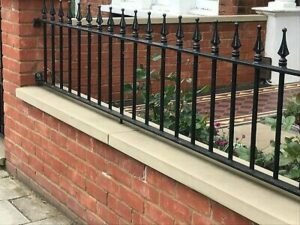
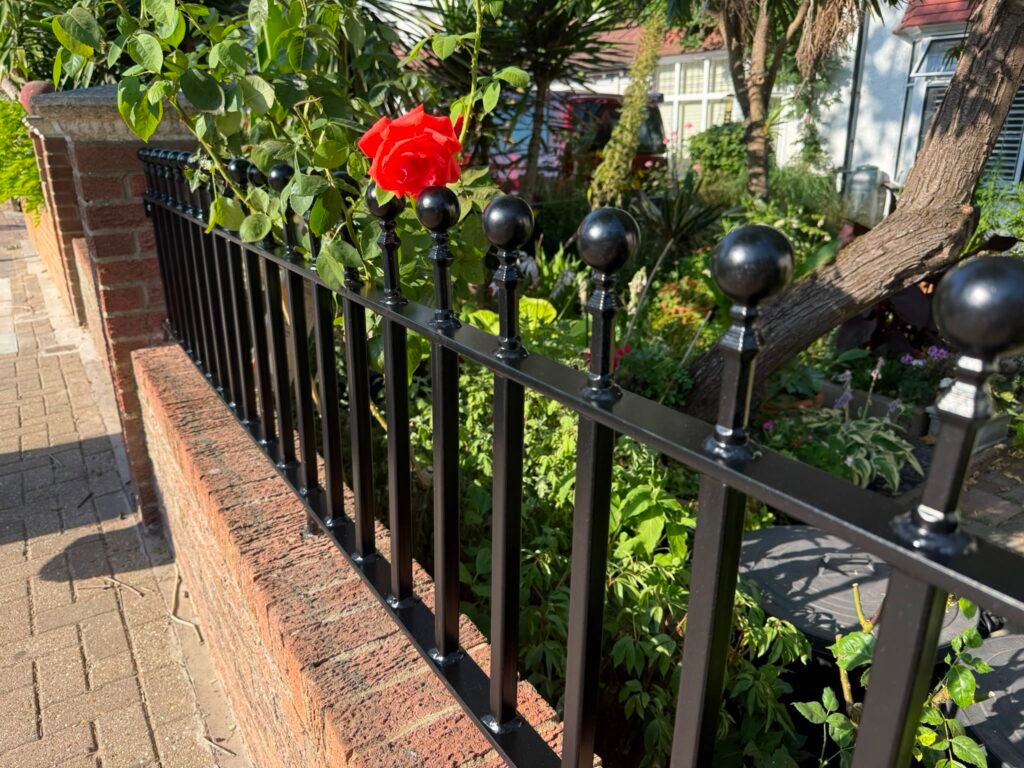
Front garden railings are one of the most consistent products we install across Wimbledon. The SW19 postcode has a higher concentration of period housing than most London areas, and with that comes a higher proportion of frontages where the original ironwork has been lost, badly replaced, or never properly maintained. Getting this right matters here more than in most parts of London, because Wimbledon is also a property market where presentation drives significant value and where buyers at every price point notice the front of a property before they notice almost anything else.
This guide covers what works on the different property types across SW19, what front garden railings cost in Wimbledon in 2026, and what the planning and conservation area picture looks like across the borough.
Why Front Garden Railings Matter More in Wimbledon
Wimbledon has a property value profile that makes boundary treatments directly relevant to sale prices. According to Hill & Way’s 2026 area guide, the average house price in Wimbledon Village sits at approximately £1.4 million, with premium addresses commanding considerably more. Even across the wider SW19 postcode, which takes in South Wimbledon, Wimbledon Chase, and Wimbledon Park, average values run significantly above the London mean.
At these price points, buyers are paying attention to the detail of every elevation. A well-maintained period front boundary with properly proportioned railings that suit the architecture reads as a property that has been looked after. A boundary with mismatched, poorly specified, or deteriorated railings raises questions about maintenance standards throughout the property.
The other factor specific to Wimbledon is street consistency. On the Victorian terrace streets of South Wimbledon and the Edwardian semi streets around Wimbledon Park, the properties that maintain their original railing character or replace it sympathetically contribute to a streetscape that looks cohesive and well-maintained. This matters for every property on the street, not just the one being worked on.
Wimbledon’s Four Property Zones and What They Mean for Railings
SW19 is not uniform. The housing stock, plot sizes, and architectural character vary significantly across the postcode, and the right railing specification for each area is different.
Wimbledon Village – Premium Bespoke and Period Restoration
Wimbledon Village sits at the top of Wimbledon Hill and contains some of the most significant residential properties in South West London. The streets around Cannizaro Park, Wimbledon Common, and Home Park Road feature large detached Victorian and Edwardian houses with generous front gardens. Properties here were often built with substantial period ironwork at the front boundary, and where this survives, it sets a visual standard that any new railing work must match or exceed.
For Wimbledon Village properties, bespoke railings designed around the specific property are the appropriate approach. The pier dimensions, the boundary wall character, the surviving ironwork profile if any sections remain, and the architectural period and character of the house all inform the design. Standard catalog sections look wrong against the scale and quality of Village properties.
Much of Wimbledon Village falls within conservation areas managed by Merton Council. The Wimbledon Village Conservation Area and the adjacent West Wimbledon Conservation Area mean that boundary changes may require planning input. See Merton Council’s conservation areas guidance for the full list of designated areas and what applies within each.
The ground conditions in Wimbledon Village and on the Hill are also worth understanding. The elevated streets sit on Bagshot Formation sandy soils rather than the London clay that dominates lower areas of South West London. Sandy soil drains more freely and is more stable for post foundations than clay, which is one of the reasons the large houses on Wimbledon Hill Road and the Village streets have well-preserved mature front gardens the soil does not have the seasonal movement of clay.
Typical cost: £220 to £380 per linear metre fully installed. Longer runs with decorative sections and bespoke gate sections bring total project costs into the £3,000 to £8,000 range on larger Village frontages.
South Wimbledon and the Victorian Terrace Streets
The Victorian terraces of South Wimbledon the streets between Wimbledon High Street and South Wimbledon station, and those extending toward Colliers Wood and Merton High Street are the most common front garden railing brief in our service area.
These properties were built with cast or wrought iron front garden railings as standard. Much of the original ironwork was removed during the Second World War scrap metal collections (1941 to 1944) and was never replaced, leaving many South Wimbledon terraces with an incomplete or entirely absent front boundary treatment. Some properties have replacement railings from various decades after the war, often in inconsistent profiles that do not match the surrounding street.
For South Wimbledon Victorian terraces, the railing brief is almost always the same: vertical bar infill with lance or spear finials, in the period profile that would have been original to the property, in black powder coat, at a height of 900mm to 1,100mm. Where original railing bases survive in the boundary wall, we build onto them. Where sections of original ironwork survive on adjacent properties on the same terrace, we take a profile and reference measurement before fabricating the new sections.
The ground conditions in lower South Wimbledon, particularly on streets closer to the River Wandle corridor, shift toward London clay. Post fixing into clay-heavy boundary walls requires deeper holes and more careful specification than the sandy soil on the Hill.
Typical cost: £150 to £220 per linear metre for standard Victorian profile. A typical 6 to 8 metre front boundary run costs between £900 and £1,750 fully installed.
Wimbledon Park — Edwardian Semis and Kerb Appeal
The Edwardian semi-detached houses around Wimbledon Park station and the streets south of Arthur Road represent one of the strongest markets for front garden railings in SW19. These properties typically have wider frontages than Victorian terraces, more generous front gardens, and in many cases no existing boundary treatment at all.
For Wimbledon Park Edwardian properties, a well-proportioned steel front garden railing transforms the kerb appeal of the property significantly. The railing does not need to be particularly elaborate; clean vertical bars with lance finials at an appropriate height suit Edwardian architecture without being over-designed. The impact comes from defining the boundary properly and finishing the front of the property with something that looks considered.
Some Wimbledon Park streets fall within the Wimbledon Park Conservation Area managed by Merton Council. Always check the specific designation for your street before commissioning work.
Typical cost: £160 to £250 per linear meter. An 8 to 10-meter Edwardian semi-frontage typically costs £1,280 to £2,500 fully installed.
Wimbledon Chase — A Mix of Interwar and Later Stock
Wimbledon Chase, along the southern edge of SW19 toward the SW20 boundary, has a more mixed housing stock than the other three zones. Interwar semis, some post-war development, and later infill sit alongside older properties. The railing brief here is more varied some properties want a period-sympathetic railing, and others want a clean contemporary boundary treatment.
For interwar semis in Wimbledon Chase, a straightforward steel front garden railing in black or anthracite, appropriately proportioned for the plot width, is the standard specification. These properties were not typically built with original ironwork, so there is no period reference to match the design can respond to the property style and the homeowner’s preferences rather than archaeological precedent.
Typical cost: £150 to £220 per linear meter. Standard 6 to 8 meter runs from £900 to £1,750.
Costs for Front Garden Railings in Wimbledon
Wimbledon sits at the upper end of the South West London price range for front garden railing installations. Labor rates across SW19 are consistent with the wider South West London premium, and the frequency of bespoke or period-specific fabrication required by the housing stock adds to the average job cost compared with more standardized markets.
| Railing Type | Cost Per Linear Metre in Wimbledon (2026) |
| Standard steel, vertical bar, black powder coat | £150 to £220 |
| Period-profile steel with decorative finials | £200 to £320 |
| Bespoke fabricated, Village or conservation spec | £280 to £380+ |
| Victorian restoration with pier cap matching | £300 to £450+ |
A standard 6 to 8 metre front boundary run in SW19 costs between £900 and £3,000 all in, depending on the specification chosen. Longer runs, gate sections, or conservation area work push the total above these figures.
For a full cost breakdown including project types and what drives prices up or down, see our garden railings cost guide.
Conservation Areas and Planning in Wimbledon
Much of SW19 falls within conservation areas managed by Merton Council. The principal conservation areas affecting front garden railing installations in Wimbledon include:
Wimbledon Village Conservation Area: covers the premium residential streets around the Village, Wimbledon Common, and Cannizaro Park. Heritage controls apply to boundary changes here.
West Wimbledon Conservation Area: covers the residential streets on the western slopes of Wimbledon Hill.
Wimbledon North Conservation Area covers the streets north of the town centre toward Wimbledon Park.
Wimbledon Windmill and Wool Road Conservation Area: a smaller designated area near the Common.
Within these conservation areas, replacing an existing front garden railing with one of a materially different design or material can require planning permission even where the height falls within permitted development limits. The key practical question is whether the local planning authority considers the proposed railing sympathetic to the conservation area character.
For properties where original ironwork bases survive in the boundary wall, the planning position is generally more straightforward you are supplementing or matching existing historic fabric rather than replacing it with something new. For properties with no existing treatment, the design needs to be demonstrably sympathetic to the period and character of the conservation area to avoid planning complications.
If your Wimbledon property is in a conservation area, we flag this during the site survey and advise on whether a pre-application enquiry to Merton Council is worthwhile before finalising the design. The full Merton conservation areas list is available on the council website, and the UK planning portal covers the general national framework.
For listed buildings, listed building consent is required for any works affecting the character of the structure or its curtilage. Wimbledon Village has a small number of listed properties always check via Historic England before commissioning any boundary work on a listed address.
For the full planning rules guide, see our planning permission guide for London gates and railings.
What Makes a Wimbledon Front Garden Railing Look Right
This is worth addressing directly because the difference between a railing that looks as if it has always been part of a Wimbledon Victorian terrace and one that looks added on is visible from the pavement.
Proportions suit the property. A railing that is too tall for a two-storey terrace, too short for a large villa, or with bars so widely spaced they look insubstantial is immediately wrong. The height, bar spacing, and visual weight of the railing should feel calibrated to the scale of the house and the boundary wall it sits on.
The design references the period. On a Victorian terrace, vertical bars with lance finials in black look right. Contemporary horizontal infill, flat panel sections, or aluminium profiles look wrong regardless of how well they are made.
The finish is maintained. Even the best-designed railing loses most of its impact if the powder coat is peeling or the surface is visibly rusted. The specification hot-dip galvanised steel with quality powder coat is what determines how long the railing holds its appearance without maintenance. A correctly specified steel railing in Wimbledon should need no significant attention for ten to fifteen years.
It relates to the neighbours’ railings. On a coherent Victorian or Edwardian street, a railing that clearly belongs to the same family as the ones on either side reads as good stewardship of the streetscape. A railing in a completely different profile, height, or finish stands out as a mismatch, which is not the effect most homeowners are looking for.
For guidance on material choices, colours, and how to match period ironwork, see our metal railings guide for London properties.
About NOVA Gates & Railings
NOVA Gates & Railings is a CAME-approved bespoke metalwork company based in Wimbledon. We design and install front garden railings, outdoor railings, steel railings, garden railings, and fully bespoke railings across Wimbledon and all of South West London.
Every railing is fabricated in-house by our own team. We do not use catalogue sections. Made to measure as standard.
Book a Free Site Survey in Wimbledon
Call us on 020 7117 2642 or get in touch to arrange a free site survey.
We cover all SW19 and SW20 postcodes including Wimbledon Village, Wimbledon Park, South Wimbledon, and Wimbledon Chase.
NOVA Gates & Railings. Bespoke Front Garden Railings. Wimbledon SW19. CAME Approved. 10-Year Warranty.