If you are considering electric gates for your London property and want to know whether they will actually add value when you come to sell, this guide gives you a straight answer rather than the vague reassurances you find on most gate company websites.
The short answer is yes, but with important caveats. Gates add value in the right context, on the right property, with the right design and installation quality. They can also actively harm a property’s value if any of those conditions are not met. The difference between the two outcomes is the subject of everything below.
What the Numbers Actually Say
Several sources give estimates for the value uplift from electric gate installations on UK residential properties. The figures that appear most consistently in estate agent commentary and property guides range from 3 to 5 percent for quality installations on appropriate properties, with some sources citing up to 10 percent in premium markets.
In a London context, those percentages translate into real money very quickly. The average London property price sits around £671,000 according to Rightmove’s most recent HM Land Registry data. A 3 percent uplift on an average London home equals just over £20,000. A 5 percent uplift equals just over £33,000. For a property in Wimbledon Village, where average prices sit closer to £1.4 million, those same percentages mean £42,000 to £70,000.
Compare those figures against the cost of a quality electric gate installation in London typically £5,000 to £14,000 for a standard residential installation, rising to £9,000 to £20,000 for a bespoke fabricated gate and the financial case for a quality installation is straightforward for most London properties with a driveway.
The important word in all of that is quality. A poor installation, a gate that looks wrong for the property, or one that is already developing faults when a buyer views the house does not add value. It raises questions.
Why London Is Different from the Rest of the UK
Most articles on this topic cite UK-wide data. London is a different market and the value dynamics work differently here for several reasons.
Property values in South West London are significantly above the national average, which means the absolute uplift from any percentage improvement is larger. A 4 percent uplift on a £350,000 property in the North is £14,000. The same percentage on a £750,000 Wimbledon semi is £30,000. The gate costs the same to install in both cases.
The London property market is also more competitive and more scrutinized than most regional markets. Buyers viewing properties in SW19, TW9, or KT2 are comparing multiple options in a high-value bracket, and they notice the difference between a property that presents well from the pavement and one that does not. A well-designed gate that suits the property creates a first impression that works before the buyer even parks the car.
London also has a higher baseline of security awareness. Urban density, reported car theft rates, and the general experience of living in a large city mean that controlled access to a driveway resonates more with London buyers than with buyers in suburban or rural markets elsewhere. The UK Government’s Safer Streets Fund has consistently documented that physical access control measures, including gated entrances, significantly reduce opportunistic crime on residential properties.
Which London Properties Benefit Most
Not every London property benefits equally from an electric gate installation. The uplift is most significant where several conditions align.
Properties with existing driveways in high-value postcodes. The value uplift from a gate is highest where the property already commands a premium and where buyers in that price bracket expect a certain level of boundary security and presentation. Wimbledon Village, Kingston Hill, Richmond Hill, Kew, West Putney, and East Sheen are all areas where a quality gate is seen as expected rather than exceptional at the premium end of the market.
Properties where security is a genuine concern. London properties on busier roads, near commercial areas, or on streets with a history of vehicle crime see the strongest buyer response to gated access. The security benefit is not just psychological it changes the risk profile of the property in a way that buyers notice and value.
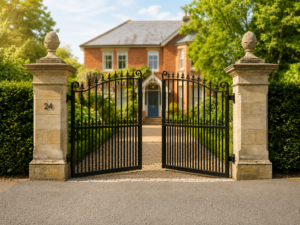
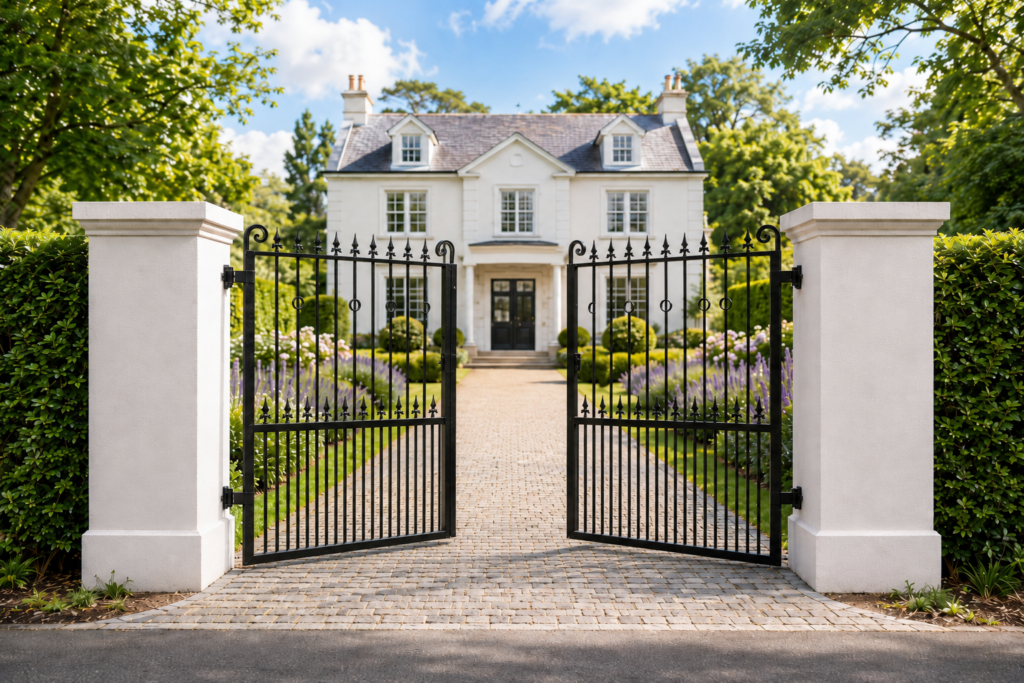
Period properties where a gate is architecturally appropriate. On a Victorian semi in South Wimbledon or an Edwardian detached in East Sheen, a well-designed bespoke metal gate that suits the property reads as completing the frontage rather than being an addition to it. These properties were originally designed with gated entrances in mind, and restoring that character is a genuine improvement.
Properties where neighbours already have gates. On streets where several properties have quality gates, a property without one can start to feel underinvested by comparison. Conversely, being the first on a street to install a quality gate can set a precedent and accelerate interest from buyers who prefer that kind of address.
Which Properties Benefit Less
There are situations where the value case is weaker or where a gate can actually work against you.
Flats and properties without private driveways. A gate only adds value where it controls access to something a driveway, a parking space, a secure entrance. Without that context, a gate is an expensive decorative element rather than a functional improvement.
Properties in very strong conservation areas with strict planning constraints. Where a gate requires significant planning effort, where the permitted design options are limited by the local authority, or where the gate cannot be positioned attractively due to site constraints, the value case is less clear.
Budget installations on premium properties. A standard catalogue gate on a £1.2 million Wimbledon property can look worse than no gate at all if the design is clearly off-the-shelf and does not suit the architecture. Buyers at this price point notice the mismatch and it can undermine confidence in the overall standard of maintenance and investment in the property.
What Estate Agents Actually Say
The consistent theme in estate agent commentary on gated properties in London is that a gate works best when it is invisible meaning it feels like it was always part of the property rather than something added. A gate that makes a surveyor or buyer think “that’s a quality gate, this property has been well looked after” is doing its job. A gate that makes them think “that’s an odd choice for this house” is not.
In the current London property market, where Zoopla data shows buyer demand running slightly below last year’s levels and pricing correctly being more important than ever, presentation and perceived quality of finish are significant factors in whether a property sells at or above guide price. A gate that lifts the overall impression of the property from the pavement contributes to that.
The resale figure that appears most consistently in industry commentary is that quality gate installations recoup 50 to 70 percent of their installation cost at the point of sale, over and above any broader property value movement. For a £10,000 installation, that suggests £5,000 to £7,000 of directly attributable value recovery, while also contributing to the overall property perception that supports the broader value.
What Makes a Gate That Devalues Rather Than Adds Value
It is worth being specific about what not to do, because the wrong gate can actively harm a sale.
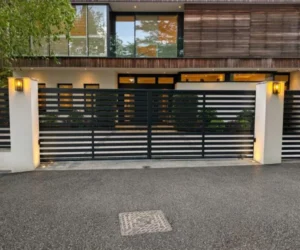
A design that does not suit the property. A flat powder-coated steel panel gate on a Georgian terrace in Richmond looks like it was purchased from a catalogue because it was. Buyers who know what they are looking at and in London’s high-value markets many of them do will see that immediately.
Poor condition gates. A gate that is sticking, a motor that sounds laboured, safety edges that are visibly deteriorating, or a powder coat that is peeling within a few years of installation all signal that the property has not been properly maintained. This can affect buyer confidence beyond the gate itself.
The wrong material for the setting. Aluminium on a Victorian terrace, timber that has not been maintained in an urban environment, or a design that clashes with the existing boundary walls all create visual friction that a buyer will feel even if they cannot articulate exactly why.
Gates that restrict access for emergency services. If a gate is positioned or specified in a way that could prevent emergency vehicle access or compromise sightlines at the exit, it creates a practical concern that a surveyor or solicitor will flag.
The Planning Consideration
Any gate needs to be installed with the correct planning permissions in place. Most residential driveway gates in London fall under permitted development and do not require a formal planning application, but conservation areas, listed buildings, and Article 4 Directions change that picture for a significant number of London properties.
A gate installed without the required planning permission can become a complication at the point of sale solicitors conducting conveyancing searches will identify it and ask for evidence of permission. For full guidance on what applies to your specific property, see our planning permission guide.
The Return on Investment: A Practical Summary
For most London residential properties with a driveway in SW, KT, or TW postcodes, a quality electric gate installation represents a sound investment that is likely to return at least its cost through a combination of direct value uplift and improved presentation at sale.
The investment case is strongest for:
- Properties valued above £500,000 where a 3 to 5 percent uplift covers the installation cost several times over
- Victorian, Edwardian, and Edwardian-era properties where a period-sympathetic gate completes the frontage
- Properties in postcodes where gated access is common among comparable properties
- Homeowners who will use and enjoy the gate for years before selling, benefiting from daily convenience and security alongside the eventual value contribution
The investment case is weaker for properties without driveways, budget installations that do not suit the property, or situations where the planning position is complicated.
About NOVA Gates & Railings
NOVA Gates & Railings is a CAME-approved bespoke gate installer based in Wimbledon, designing and installing electric gates, driveway gates, bespoke metal gates, and security gates for residential and commercial properties across London and South West London. Every gate is fabricated in-house by our own team.
For a full breakdown of what electric gates cost in London, see our electric gates cost guide and driveway gates cost guide.
Book a Free Site Survey
Call us on 020 7117 2642 or get in touch to arrange a free site survey.
We cover SW19, SW20, SW15, SW4, SW11, SW17, SW18, TW9, TW10, KT1, KT2, and surrounding areas.
NOVA Gates & Railings. Bespoke Electric Gates and Railings. Wimbledon, London. CAME Approved. 10-Year Warranty.