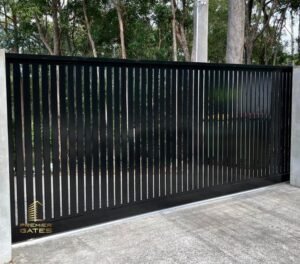
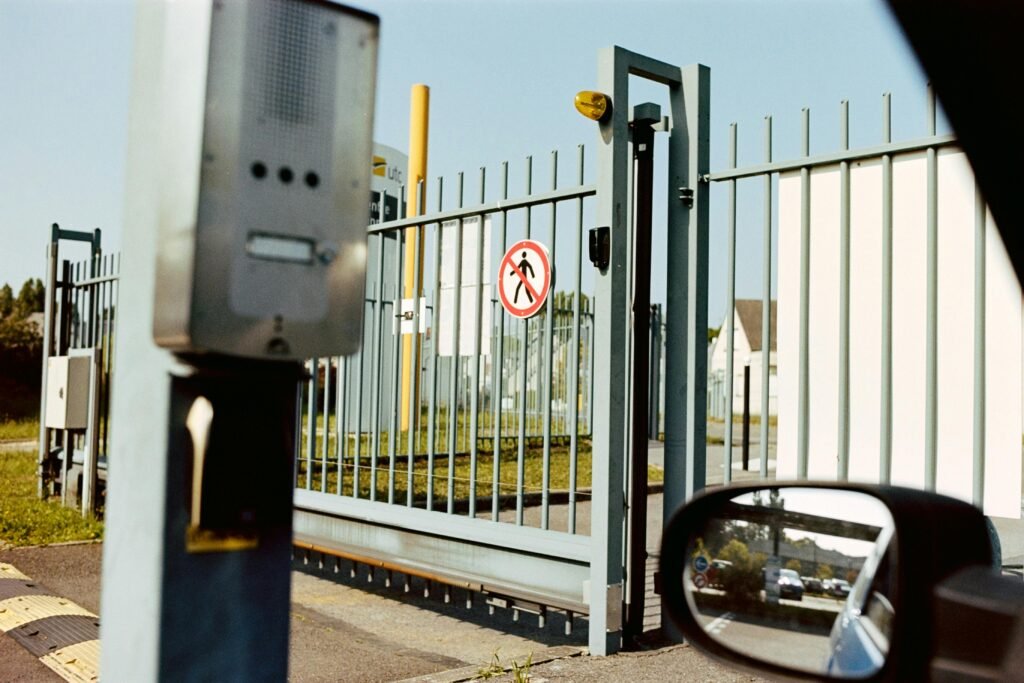
Richmond is one of the most distinctive places in South West London to install electric gates. The combination of large period properties, generous driveway widths, proximity to Richmond Park, and the particular character of areas like Richmond Hill, East Sheen, and Kew creates both genuine demand for quality gate installations and some specific local considerations that affect how a job is planned and priced.
This guide covers what you need to know about electric gate installation in Richmond in 2026. What things cost, what the local planning picture looks like, and what makes Richmond properties different from the average gate installation site elsewhere in London.
Why Richmond Homeowners Install Electric Gates
The reasoning varies depending on which part of Richmond you are in, but a few themes come up consistently.
Security is one. Richmond attracts a high concentration of larger homes with off-street parking, and a property with an open driveway in a high-value area is more exposed than it might appear. An electric gate that cannot be simply pushed open changes that calculation meaningfully.
Privacy is another. Properties backing onto the park or facing busy approach roads into Richmond Town find that a gate reduces the feeling of being on display. On roads like Queens Road, Petersham Road, and the quieter residential streets off Richmond Hill, the boundary between the property and the outside world matters to residents.
Kerb appeal is the third factor, and often the most significant for the high-value property market in TW9 and TW10. A well-designed bespoke gate on a period Richmond property is part of the overall presentation of the house. It reads immediately in the way a property is perceived from the street, and in a market where presentation drives value, that is not a trivial consideration.
What Do Electric Gates Cost in Richmond?
Costs for electric gate installations in Richmond broadly follow the southwest London price range, with some upward pressure from the nature of the properties themselves. Larger frontages, more architecturally complex sites, and the frequency of bespoke rather than standard gate requirements all push the average job toward the middle and upper end of the range.
For a complete installation including the gate structure, automation system, access control, and professional fitting:
| Gate Type | Typical Total Cost in Richmond (2026) |
| Electric swing gates (pair, standard) | £5,000 to £9,500 |
| Electric swing gates (pair, bespoke) | £7,000 to £14,000 |
| Electric sliding gate | £7,000 to £15,000 |
| Fully bespoke fabricated metal gates | £9,000 to £20,000+ |
These figures account for the Richmond premium on both labour and the bespoke fabrication that many properties here require. A gate that needs to be designed around specific brick pier dimensions, existing ironwork details, or a non-standard opening width is a different product from a standard off-the-shelf installation, and that difference shows in the cost.
For a broader view of gate pricing across London, our guide to driveway gate costs in London covers the full range by type and location.
Richmond Properties and What They Mean for Gate Installations
Richmond is not a uniform area. The housing stock, plot sizes, ground conditions, and planning context vary significantly across TW9 and TW10, and each part of Richmond has its own installation characteristics.
Richmond Hill and Petersham Road
This is the most architecturally significant part of Richmond for gate installations. Properties on and around Richmond Hill range from Georgian townhouses to large Victorian villas set back from the road behind walled front gardens. Many of these properties already have original or period-style boundary walls and gate piers that any new gate must work with rather than against.
The approach here is almost always bespoke. Off-the-shelf gates in standard sizes look wrong against original brick piers. The gate needs to be designed around the specific pier spacing, the pier height, the wall capping style, and the overall architectural character of the frontage. For properties in the Richmond Hill Conservation Area, the material and design choices are also subject to closer scrutiny from the local authority.
Richmond Hill and Petersham Road also sit within one of the protected viewshed areas established by the Richmond, Petersham and Ham Open Spaces Act 1902, which safeguards the view from Richmond Hill toward the Thames. While this does not directly restrict gate installations, it reflects the sensitivity of the area to visual change and the standards local authority planners apply when assessing any planning applications for work on front elevations here.
Queens Road and the Park Boundary
Properties on Queens Road and the adjacent streets bordering Richmond Park sit in a particularly sought-after part of TW10. Many have long driveways and wide frontages, and the combination of privacy from the park road and security from an electric gate is appealing to residents here.
The ground conditions on this side of Richmond are worth understanding. The area sits on London clay, which is the dominant subsoil across much of South West London. London clay holds moisture and expands and contracts with seasonal changes in a way that sandy or loam soils do not. Gate post foundations on clay need to go deeper than on more stable ground to prevent movement, and the concrete mix used for foundations needs to be appropriate for the conditions. A professional installer who understands this will size the foundations accordingly. One who does not may leave you with posts that shift within a couple of years.
Kew and Kew Green
Kew has a particular character that sets it apart from the rest of Richmond. The streets immediately around Kew Green and toward the Royal Botanic Gardens contain some of the most distinctive domestic architecture in TW9, including Georgian terraces and individual houses of considerable historic interest. Kew Green itself is a conservation area, and Kew Road and Lawn Crescent are among the separately designated conservation areas within the borough.
For gate installations in Kew, the design must respond to the architecture of the property. A simple steel flat-panel gate works well on a mid-century or modern house. A Georgian or early Victorian property needs a design that references the period, whether through vertical railing-style infill, a traditional pattern, or a design that mirrors or complements existing ironwork on the boundary.
East Sheen and Upper Richmond Road West
East Sheen has a mix of Edwardian semis, larger interwar detached houses, and some more recent infill development. The driveways here tend to be narrower than those in the Richmond Hill and Queens Road areas, which makes gate type selection more important. Many East Sheen driveways suit double swing gates well. On shorter driveways or where the entrance is close to the pavement, sliding gates are sometimes the better option.
East Sheen Avenue is its own conservation area, and Christchurch Road has a separate designation. If your property falls within one of these areas, it is worth checking before proceeding.
The Upper Richmond Road West running through East Sheen toward Mortlake is a busier road, and properties fronting onto it sometimes have access constraints from the highway authority regarding gate opening direction and the proximity of the gate to the carriageway. Your installer should check this during the site survey.
Conservation Areas in Richmond: What You Actually Need to Know
Richmond upon Thames has 72 designated conservation areas, which is an unusually high number even by London standards. The areas cover much of the most desirable residential land in TW9 and TW10, including Richmond Hill, Richmond Green, Kew Green, Kew Gardens, Petersham, East Sheen, and many of the quieter residential streets within walking distance of the park.
Being in a conservation area does not automatically mean you need planning permission for an electric gate. Standard permitted development rights still apply to most residential gate installations in Richmond’s conservation areas, subject to the usual height limits and conditions. The key rule from Richmond Council’s conservation area guidance is that planning permission is required to demolish or replace a boundary wall, gate, or fence over one metre in height where it fronts a highway, or over two metres in any other case. Installing a new gate onto existing piers where no existing gate is being demolished typically does not trigger this requirement, but the specifics depend on the property.
The situations where planning permission is more likely to be required in a Richmond conservation area include: replacing an existing gate with one of a significantly different design or material, altering existing boundary walls as part of the gate installation, or installing a gate on a listed building. Richmond Borough’s planning team can advise on specific cases, and the full list of conservation areas in the borough is available on the council website.
What this means practically is that design matters in Richmond more than in most other London boroughs. Even where planning permission is not required, choosing a gate design that responds sensitively to the property and its neighbours is the right approach. Conservation area officers do notice when a property on an otherwise coherent Victorian street installs a gate that looks like it belongs on a 1990s gated development.
Ground Conditions Near the Thames
Properties in the lower-lying parts of Richmond, particularly those between the town centre and the river, the Riverside area, and parts of Petersham closer to the Thames, sit on ground conditions that are more varied than the London clay of the upper slopes.
Alluvial deposits near the river mean softer, more waterlogged ground in some locations. This affects both the foundation specification for gate posts and the drainage around any ground track for sliding gates. A cantilever sliding gate system, which does not require a ground track, is often a better solution near the river than a track-based system, because the track drainage issues that affect clay sites are amplified on softer alluvial ground.
This is exactly the kind of consideration that a site visit resolves. The ground condition at your specific property may be perfectly standard. It may require a modified approach. The only way to know is to look at the site properly before specifying the installation.
Swing Gates vs Sliding Gates in Richmond
Both swing and sliding electric gates are installed regularly in Richmond, and the right choice depends on the specific driveway rather than personal preference alone.
Swing gates are the default choice for most Richmond driveways because most properties in TW9 and TW10 have enough driveway depth for the gates to open inward comfortably. A pair of swing gates opening inward on a 10 to 15 metre driveway works cleanly and avoids the space requirements of a sliding installation. Above-ground arm motors or underground motors both work well with swing gates. Underground motors are popular in Richmond because they keep the gate post face clean and uncluttered, which suits the visual standards of period properties better than a visible mechanical arm.
Sliding gates are the answer where driveway depth is limited or where the driveway slopes away from the road at the entrance. Some of the properties near the river and on the lower slopes of Richmond Hill have shorter driveways or ground conditions that make swing gates problematic. For these sites, a sliding gate on a cantilever system is typically the recommended solution.
Smart Gates and App Control in Richmond
A growing number of Richmond homeowners are specifying smart gate systems alongside their electric gate installations. The ability to open the gate from a phone, grant access remotely to a delivery driver, or monitor arrivals through an integrated camera system is increasingly part of what people expect from a premium installation.
CAME-approved systems, which NOVA Steels installs, support GSM and Wi-Fi-based phone control as a standard addition to any electric gate installation. The integration with video intercoms is reliable and straightforward, and the systems can be linked to smart home platforms where that is part of the property setup.
For Richmond properties used as primary and secondary residences, remote access control is particularly valuable. Being able to open your gate before you arrive, or let a housekeeper in without exchanging physical keys, is a practical benefit that goes beyond security.
What Makes a Good Gate Installer in Richmond
Richmond is a competitive area for gate installation and there are many companies that will quote for work here. A few things are worth considering when comparing installers beyond the headline price.
Bespoke fabrication capability: Many Richmond properties cannot be served by off-the-shelf gate systems. If an installer cannot fabricate to a non-standard width, design a gate around existing piers, or match a period architectural style, the result will look wrong regardless of how well it is installed. Ask whether fabrication is done in-house or subcontracted. In-house fabrication gives you more control over the outcome and clearer accountability if anything does not match the brief.
Understanding of conservation area context: An installer who is not familiar with Richmond’s planning landscape may give you inaccurate advice about what requires permission and what does not. This can lead to problems later. An experienced installer will flag any planning considerations during the site survey and advise you honestly on whether a pre-application consultation with Richmond’s planning department is worthwhile.
Safety compliance: Under HSE guidelines for powered gate installations, every electric gate must be fitted with safety photocells, safety edges, and a force test before handover. These are legal requirements and any professional installer includes them as standard. Documentation confirming compliance should be provided at handover. If a quote does not mention safety compliance explicitly, ask about it before proceeding.
Warranty and aftercare. A gate on a Richmond property is a long-term investment. Make sure any quote includes warranty terms for both the fabricated gate and the automation system, and that the company offers annual servicing. A motor call-out in London from a professional gate company costs £150 to £350 before parts. A proper annual service, costing around £100 to £200, prevents most of the faults that lead to those call-outs.
About NOVA Steels
NOVA Steels is a CAME-approved gate installer based in Wimbledon, designing and installing bespoke metal gates and railings for residential and commercial properties across South West London. We work regularly in Richmond, East Sheen, Kew, Twickenham, and the surrounding TW postcodes, as well as across Wimbledon, Putney, Kingston, and the broader SW and KT areas.
Every gate we install is fabricated by our own team. We do not outsource fabrication or pass installations to subcontractors. For Richmond properties where design sensitivity and fabrication quality matter, that continuity from design through to installation and handover is worth asking about when comparing quotes.
Book a Free Site Survey in Richmond
The best way to get an accurate quote for your Richmond property is a site visit. At NOVA Steels, the free site survey covers measuring your entrance, assessing ground conditions and post foundation requirements, reviewing power supply access, discussing gate design and material preferences, checking any conservation area or planning considerations relevant to your property, and providing a clear written quote.
There is no obligation and no pressure to proceed.
Call us on 020 7117 2642 or get in touch through our contact page. We cover TW9, TW10, TW1, TW2, SW13, SW14, SW15, and the surrounding areas.
NOVA Steels. Bespoke Electric Gates and Railings. Wimbledon and Richmond. CAME Approved. 10-Year Warranty.