Driveway gates are one of the most searched home improvement projects in London right now, and one of the most confusing to price up. Search online and you will find figures ranging from a few hundred pounds to well over twenty thousand. Both can be accurate depending on what you are looking for, but neither is much help when you are trying to work out what a gate would cost for your specific property.
This guide cuts through that and gives you a clear, honest view of what driveway gates actually cost in London in 2026. The prices here reflect what homeowners across SW and KT postcodes pay when using a local, professional installer. They account for the London labour premium, the range of gate types that suit different properties, and the access and groundwork realities that push costs up on many sites.
If you just want a ballpark figure before reading further, most London homeowners pay somewhere between £4,000 and £14,000 for a complete driveway gate installation. What puts you at one end or the other is the subject of everything below.
What Do Driveway Gates Cost in London? The Quick Answer
Rather than one average that covers nothing well, here is a breakdown by gate type. All figures include the gate structure, automation, and professional installation in London.
| Gate Type | Typical Installed Cost in London (2026) |
| Manual swing gates (pair) | £2,500 to £4,500 |
| Electric swing gates (pair) | £4,500 to £9,000 |
| Electric sliding gate | £6,000 to £14,000 |
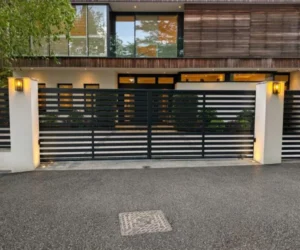
| Bespoke fabricated metal gates | £8,000 to £20,000+ |
These are London prices. National comparison sites like Checkatrade will show lower averages because they aggregate quotes from across the UK. Labour rates in South West London are materially higher than in the Midlands or North, and that difference flows directly into what you pay.
The London labor premium: What It Means for Your Quote
It is worth understanding this upfront because it is the single biggest reason London quotes look higher than what you read online.
Professional gate installers in London typically charge between £350 and £600 per day per operative. Groundwork specialists, which most gate jobs require for post foundations and cable runs, charge at the upper end of that.
A standard two to three day installation involves at least two people on site for most of it. That is before materials, gate fabrication, or any electrical certification costs.
For context, the same installation in a northern city might use day rates of £200 to £300. The gate and motor cost the same. The labour does not.
In Wimbledon and the surrounding SW19, SW20, and KT postcode areas, sites also tend to have complications that add time. Victorian and Edwardian front gardens with mature planting, London clay soil that requires more substantial post foundations, properties with narrow access, and cable runs that need to go under existing paths or patios are all more common here than on newer estates. Each one adds time, and time is cost.
None of this means driveway gates are not worth it in London. It just means a quote built on national average figures is not going to be accurate for your street.
The Four Things That Determine Your Final Price
1. Gate Type and Opening Mechanism
This is the biggest single variable. Manual swing gates are the most affordable option but require you to get out of the car to open and close them, which suits some homeowners and frustrates others. Automated gates solve that but add significant cost for the motor, electrical connection, and safety commissioning.
Between automated options, swing gates and sliding gates operate very differently and suit different driveways. Swing gates need clear space either in front of or behind the gate to open into. If your driveway is short or slopes down from the road, they may not be practical. Sliding gates run parallel to the boundary and need clear fence or wall space to one side. They cost more because the groundwork is more involved and the motor needs to be more powerful, but they are often the only workable option for certain sites.
Bi-fold gates are a third option that fold in half as they open, taking up less swing clearance than a standard swing gate. They are less common and cost more than standard swing gates but less than most sliding installations. They are worth considering if space is tight but a sliding gate is not feasible.
2. Gate Material and Design
Most London homeowners choosing a quality installation go for steel or aluminum rather than timber, and there are good reasons for that. Steel takes a finish extremely well, handles the British weather reliably, and, for bespoke fabrication, it gives fabricators the most flexibility in design. Aluminum is lighter, which matters when gate widths are large, and it is naturally rust-resistant.
Timber gates have a place, particularly for certain period property styles, but they need more maintenance than metal and tend not to hold up as well in urban environments, where gates are used heavily. For a front driveway gate used multiple times a day, most installers in London will steer you toward metal.
Within steel and aluminium, the cost split is between standard designs and bespoke metal gates. A standard design gate in a set of fixed sizes with basic infill will cost less than a gate designed specifically around your pillars, matched to your existing railings, or featuring decorative patterns. Bespoke fabrication means more time in the workshop, and that costs more. It also produces something that looks completely different to the neighbors’ gate, which is often the point.
3. The Automation System
Once you decide on electric, the motor system is the next major decision.
Above-ground articulated arm motors sit on the back of the gate post and connect to the gate leaf via a mechanical arm. They are the most widely used system for residential swing gates, the most straightforward to service, and the most affordable. A branded kit for a pair of residential swing gates typically costs £900 to £1,800 for the automation components alone, before installation.
Underground motors are buried beneath the hinge posts and completely invisible from the front of the property. The gate appears to open on its own, which is a noticeably cleaner look. The trade-off is cost. Underground motor installations add £1,500 to £3,500 or more to the project because of the additional groundwork, drainage requirements, and installation time. They are popular on premium properties where curb appeal is a priority.
For sliding gates, the motor runs along a track set into the ground or, in a cantilever system, hangs from a beam without a ground track at all. Cantilever systems are more expensive but work on uneven or soft ground where a ground track would be problematic.
4. Access Control: Intercoms, Keypads and Smart Systems
A basic automated gate opens with a handheld remote. Most homeowners want more than that, and the cost of additional access control varies considerably.
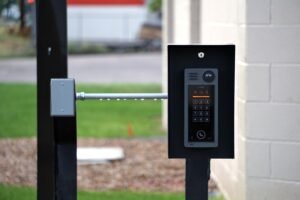
A video intercom with an outdoor camera post and an indoor monitor or phone connection is the most popular upgrade. Wired systems from reputable brands cost between £400 and £1,200 fitted depending on the spec and cable run length. Wireless intercoms are available at lower cost but generally less reliable over the long term.
Coded keypads for visitors or tradespeople who need occasional access add £200 to £500. Smart gate systems that allow you to open the gate from your phone, monitor who has arrived, and set automated schedules add £300 to £800 for the GSM or Wi-Fi module, more for fully integrated smart home setups.
At the top end, automatic number plate recognition systems that open the gate when your car approaches start from around £1,500 for a basic residential setup.
Driveway Gate Prices by Type: Full London Breakdown
Manual Swing Gates
Manual swing gates are the entry point. A pair of quality steel or aluminum manually operated gates for a standard 3.5 to 4 metre London driveway, professionally supplied and installed including post foundations and gate furniture, costs between £2,500 and £4,500 in London.
This does not include automation. If you think you might want to add a motor later, tell the installer before work starts so the posts and groundworks can be prepared to accept one. Retrofitting automation to gates that were not designed for it is possible but costs more than installing it at the same time.
Electric Swing Gates
Electric driveway gates with a pair of swing leaves are the most popular choice for residential properties across SW London. They suit the majority of London properties because most Victorian and Edwardian houses have enough driveway depth for the gates to open inward. The combination of good looks, reliable automation, and relative simplicity of servicing makes them the default recommendation for most sites.
For a complete electric swing gate installation in London, including steel or aluminum gates, above-ground articulated arm motors, remote handsets, basic intercom, all groundworks and electrical connections, and full safety commissioning, expect to pay between £4,500 and £9,000.
Underground motors, more decorative gate designs, wider openings, and more advanced access control all push the figure toward and above the upper end.
Electric Sliding Gates
Sliding gates are the right answer for driveways where swing gates simply will not work. Short driveways, driveways that slope away from the road, driveways where the gate would open directly in front of a parking space, and properties where the entrance is close to a pavement are all situations where sliding is the practical choice.
The trade-off is cost. Sliding gates require more groundwork for the track, a more powerful motor, and generally more installation time than swing gates. For a residential electric sliding gate in London, installed costs typically run from £6,000 to £14,000 depending on the width of the opening, the motor type, whether a cantilever system is needed, and the gate material.
Bespoke Fabricated Metal Gates
Bespoke metal gates are designed and fabricated from scratch around your specific property. The dimensions, the design, the finish, the way the gate relates to existing pillars or railings all of it is worked out for that one installation rather than selected from a catalogue.
This is what most homeowners on premium Wimbledon, Richmond, and Kingston properties end up choosing when they want something that looks considered rather than off the shelf. It is also what period properties often need when the gate has to match original ironwork or complement brick piers of a particular height and style.
Bespoke fabrication takes longer and costs more. Lead times for manufacture before installation starts are typically four to six weeks. Installed costs start from around £8,000 and reach £20,000 and above for large, complex, or highly decorative work.
How London Property Types Affect Cost
The variety of housing stock across SW London means no two installations are quite the same, and the property type genuinely affects what you pay.
Large detached and semi-detached houses in areas like Wimbledon Village, Wimbledon Park, and parts of Kingston have wide frontages and long driveways. Wide openings mean larger gates and more powerful motors. Longer driveways sometimes mean longer cable runs from the property’s consumer unit to the gate post, and in London those cable runs often go under paths or patios, adding excavation and reinstatement costs.
Victorian and Edwardian terraces throughout SW19, Putney, and Wandsworth tend to have narrower frontages but often feature original brick pillars that the gate must be fixed to. Matching or working around these adds design and fabrication complexity. Properties in conservation areas, which exist across large parts of Wimbledon and Richmond, may also have restrictions on gate height or material that need to be checked before any work starts.
Newer builds in areas like New Malden, Sutton, and parts of Croydon tend to have more straightforward installations because the groundworks are more predictable and there are fewer architectural constraints. These jobs generally sit at the lower end of the price ranges above.
If your property is in a conservation area or you are unsure whether you need planning permission, the UK planning portal has guidance on when permitted development rights apply. Most residential driveway gates under two metres in height fall under permitted development, but there are exceptions and some London boroughs apply additional local restrictions.
Installation: What Happens on Site and What It Costs
Professional gate installation in London typically takes two to four working days for a standard electric swing gate, longer for sliding gates or bespoke designs.
Day one is groundwork. Post foundations are dug, mixed, and poured. For electric gates, the conduit for electrical cabling is laid at this point. This is where London clay and tree roots become relevant. Excavating through clay takes longer than sandy or loam soil, and the posts need to go deeper because clay moves more with moisture. A job that would take four hours on a new-build can take eight hours in an established front garden in SW19.
Day two is hanging and wiring. The gates go on, motors are fitted, and the electrical connection is run from the consumer unit to the gate post. If the consumer unit is on the far side of the house from the gate, this cable run can be a significant part of the job. Under HSE guidelines for powered gate installations, all electric gate installations must include safety photocells, safety edges on the leading edge of the gate, and a force test to confirm the gate stops and reverses when it encounters an obstruction. These are legal requirements, not optional extras, and any professional installer will include them.
Day three covers finishing, intercom setup, and commissioning. Handover includes a demonstration of all functions, handsets, and codes and a record of the safety compliance checks.
Installation labor for a standard residential job in London costs approximately £1,500 to £3,500. Complex sites, awkward access, sloped ground, or long cable runs push this toward and above the upper end.
Ongoing Costs: What to Budget After Installation
The running costs of a residential electric gate are low. Electricity consumption for a typical gate operated several times a day adds around £15 to £20 per year to a household energy bill. That is genuinely not a significant figure.
Annual servicing is worth budgeting for separately. A proper service visit covers lubrication of hinges and moving parts, motor checks, photocell and safety edge testing, and a review of the control board. Most professional installers charge £100 to £200 for this. Skipping servicing is a false economy because most motor failures that lead to expensive call-out fees are preventable with basic maintenance. A motor call-out in London from a professional gate company costs £150 to £350 before any parts.
Battery backup is included in most modern motor systems and keeps the gate working during power cuts. Replacement batteries cost £50 to £150 and typically need replacing every three to five years.
All NOVA Steels installations include a 10-year warranty on the fabricated gate structure, which significantly reduces the risk exposure on long-term running costs.
Frequently Asked Questions
Do I need planning permission for driveway gates in London?
In most cases, no. Driveway gates under two metres in height that open inward onto your property generally fall under permitted development rights and do not require a planning application. The exception is if your gate is adjacent to a classified road and over one metre in height, in which case permission may be required. Listed buildings and properties in conservation areas also have stricter rules, and some London boroughs have additional local guidelines. If you are unsure, the planning portal is the right starting point, and your installer should flag any concerns during the site survey.
How long does installation take?
A standard electric swing gate installation takes two to three working days. Electric sliding gates and bespoke fabricated gates take three to four days on site, plus four to six weeks lead time for manufacture before installation begins.
Can I add automation to existing gates?
Yes, in many cases. If your current gates are structurally sound and properly hung, a motor system can often be retrofitted. The cost depends on the gate type and weight, typically between £1,200 and £3,000 including installation. Your installer will assess suitability during a site visit.
What happens to the gate during a power cut?
Modern motor systems include battery backup as standard, which powers the gate through most power cuts without any interruption. If the battery also fails, all professional motor systems include a manual release so the gate can be opened by hand. Your installer will show you how this works at handover.
How wide should driveway gates be?
Most residential driveways in London require a gate opening of 3 to 4.5 metres for comfortable single-vehicle access. Wider openings are possible but require heavier gates and more powerful motors. Your installer will measure the exact opening and advise on the right gate width during the site survey.
What to Check Before You Choose an Installer
Getting three quotes is sensible for a project of this size. When comparing them, a few things are worth looking at beyond the headline figure.
Ask whether the gate is fabricated in-house or supplied from a third party. Installers who make their own gates have more control over quality and clearer accountability if anything does not match what was agreed. Installers who supply and fit a gate from a catalogue supplier are not necessarily worse, but you have less visibility over what you are getting.
Check that safety compliance is explicitly included in the quote. HSE guidelines require photocells, safety edges, and force testing on all powered residential gates. If a quote does not mention these, ask specifically whether they are included.
Look at warranty terms. Gate and motor warranties vary significantly. A 10-year warranty on the structure is meaningfully better than a one-year parts and labour warranty.
Finally, ask about aftercare. Who do you call if the gate develops a fault six months after installation? Is there an emergency call-out service? Can they service the gate annually? For a product you will use several times a day, aftercare matters.
About NOVA Steels
NOVA Steels is a CAME-approved gate and railings installer based in Wimbledon. We design, fabricate, and install bespoke metal driveway gates for residential and commercial properties across SW19, SW20, Putney, Richmond, Kingston, Sutton, Croydon, and the wider London area.
Every gate is made by our own team and fitted by the people who built it. We do not subcontract fabrication or installation. That means one company is accountable for the whole project from the first survey to the final handover.
Book a Free Site Survey
The only way to get an accurate price for your specific property is a site visit. At NOVA Steels, the free site survey covers measuring your entrance, assessing the ground conditions, reviewing power supply access, discussing your design preferences, and providing a clear itemised written quote.
There is no obligation and no pressure to proceed.
Call us on 020 7117 2642 or get in touch through our contact page. We cover SW19, SW20, SW15, TW9, TW10, KT1, KT2, KT3, KT4, KT5, KT6, and surrounding areas.
NOVA Steels. Bespoke Driveway Gates and Railings. Wimbledon, London. CAME Approved. 10-Year Warranty.